

Is cheaper better?
Are vets overpriced?
Is it unethical to charge such different rates between vet clinics?
The myths behind price differences between different clinics and practices have long been a big question mark for pet owners, with different speculations and conspiracy theories to explain what the differences are and why this is so.
This article is to help debunk some of these speculations and provide a more transparent look into the different details one might expect for the same procedure done in different places. This is to help pet owners understand what goes on behind the price label and to ask the right questions in order to have a thorough understanding of what they choose, thus fulfilling different expectations and requirements.
Neutering is a surgical procedure that removes the reproductive organs in animals. For female pets, neutering is also known as a “spay” procedure. This procedure involves general anaesthesia, surgical incision, suturing, and post-operative recovery time. Spaying is one of the most commonly performed procedures among veterinarians in the world and has often been used as a price comparison model between clinics. But why are some places charging RM500 (or more) for the same procedure that other places charge RM250 for?
To help explain this, a spay/neuter procedure can be broken down into 3 different phases – pre-surgical, surgical, and post-surgical.
Pre-surgical Neutering assessment
A pre-surgical assessment is recommended for all patients scheduled for surgery in order to help determine if they are fit to undergo surgery by ruling out any underlying issues of concern before proceeding. General physical examination, auscultation of the chest, and a peripheral blood film exam are all routinely done in certain practices. This involves the time and skill set of the surgeon on duty and helps to detect any potential problems that may deem the patient as a candidate fit for general anaesthesia and surgery or not. Pre-anaesthetic blood tests are sometimes done as well, depending on circumstances. Some surgical procedures have been postponed or cancelled if the patient has been found to be unfit or at risk for surgery. This level of attention is most often not provided for when charges are cheaper.
Neutering Surgery
General anaesthesia (GA) is the main risk involved in this procedure. Depending on the procedure, clinic, and surgeon, GA can look like using 1 single injectable drug as induction and maintenance throughout the whole procedure. Other times, GA can also mean establishing an IV port for intra-operative fluids, allowing immediate intervention in case of any crisis; it involves the use of a combination of a multi-drug protocol as induction, maintenance with an inhaled anaesthetic agent plus sufficient pain management protocol. All this allows for a smooth GA, smooth recovery and pain management.

During the surgical procedure, the only monitoring of the patient under GA could be the vet surgeon occasionally checking the patient for breathing and occasionally checking the tongue colour in case of crisis.
Monitoring of patients under GA also can be done with a full setup complete with devices that detect SpO2 (oxygen levels), ETCo2 (breathing), ECG (heart activity), and blood pressure. Sometimes, the monitoring might be assigned to another veterinarian or nurse.
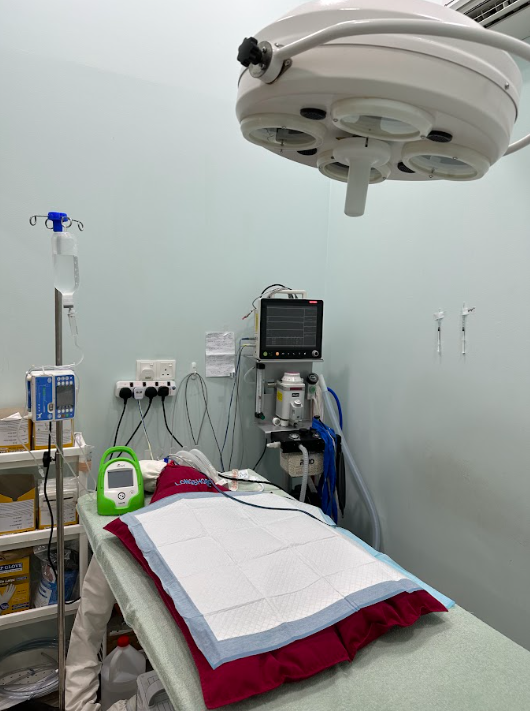


The surgery procedure itself may involve a properly sterilized surgical set with proper draping and quality suture materials for closure. Or it may be a minimal 4-5 instrument set without draping and improper sterile technique.
Pro-tip: in sterile and properly set up surgical procedures, patients often do not require any post-operative antibiotics if the procedure was uneventful (in the recent call for justified antibiotics usage, this is an important point).
Post-surgical Neutering care
Patient monitoring after the procedure is completed is very important. This could mean having a dedicated staff/nurse to monitor the patient’s vitals during recovery. They also check for hypothermia, a swallowing reflex, and extubate (removal of endotracheal tube) to ensure a smooth recovery without complications. Patients also have pain levels assessed. All this means additional medication may be required for the smooth recovery of the patient.
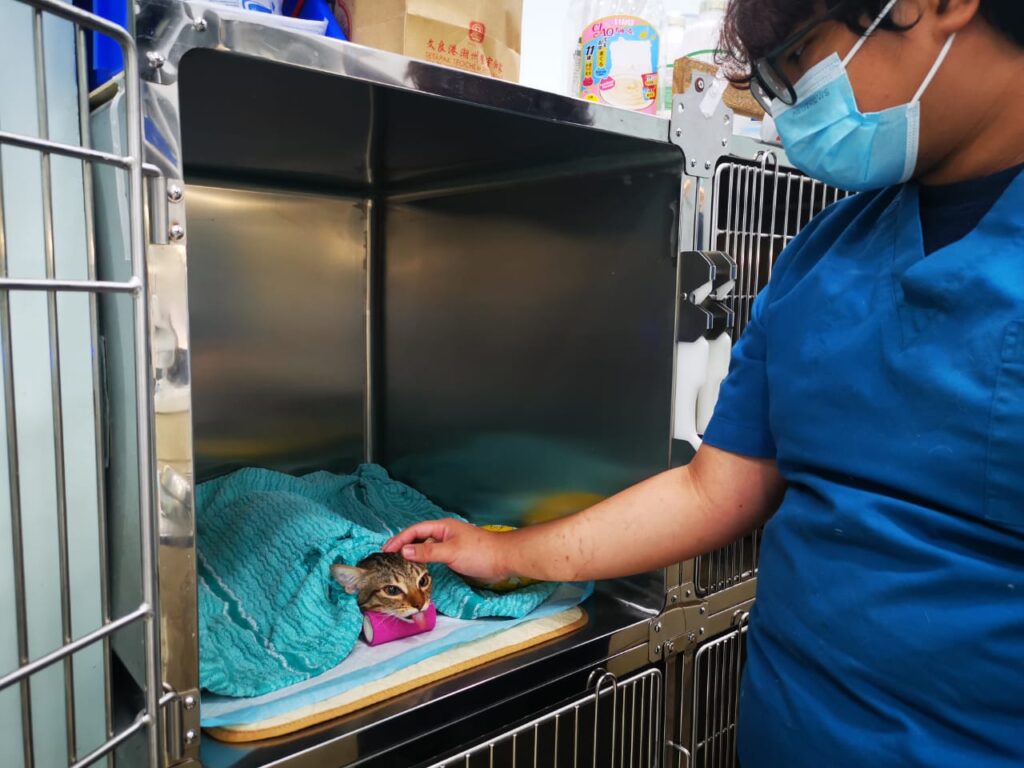
Sometimes, however, patients are placed in recovery sections with minimal supervision as the veterinarian/nurse gets busy preparing for the next procedure/patient.
Conclusion:
Cost is always a factor to consider in any pricing, and with this understanding, you are better equipped to ask the right questions and choose what suits your requirements and expectations.
Cheaper is not always better but sometimes it is necessary in order to provide the maximum use of a limited time and manpower. This is true especially for Trap-Neuter-Release campaigns where attending to a high volume of patients under a limited time is always a challenge. Having the option of a cheaper surgery choice is also helpful for owners who have lots of pets to neuter or have a limited budget.
Disclaimer: This article is not intended to promote or demote any veterinary practices out there. Rather, it aims to provide an educational perspective for pet owners so they know what questions to ask and what factors to look out for when choosing between surgical options for their pets.
Dr Tan Zhang Jian
Kota Damansara Veterinary Centre
Related Page You May Be Interested In:
- Learn more about our Vet for Dogs services to help your pet recover from injuries and improve mobility.
- Explore our Vet for Cats services designed to address fractures, luxations, and other orthopedic conditions.
- Discover how our Veterinary Surgery solutions can restore function and alleviate pain in pets of all sizes.
- Ensure your pet receives ongoing care with our Veterinary Care services, focused on both recovery and preventive health.